ℹ️in reference to what makes protobuf faster?. You write code in a language humans can read. The computer only understands binary (0s and 1s). A compiler bridges that gap. This is why protobuf needs a compiler you write the schema in .proto format, run protoc, and it generates Go
📖Chapter 2 of Distributed Services with Go swaps JSON for Protocol Buffers. Before writing a single .proto file, I wanted to understand why and what actually makes Protobuf faster? Understand serialization Example: curl -X GET localhost:8080/consume -d '{"offset":0}' {"record":{"value&
📖Chapter 1 summary of pragprog.com/titles/tjgo/distributed-services-with-go/ The correlation when building anything Every server you ever build has exactly three layers: LAYER 1 DATA "what do I store and how?" -> your Log, your Database, your Cache -> pure Go structs, no HTTP, no
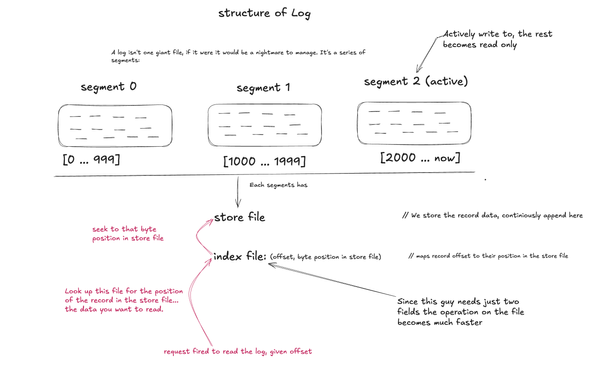
uint = unsigned integer, no negative numbers. Range is 0 to a very large positive number. var x int // -9,223,372,036,854,775,808 to +9,223,372,036,854,775,807 var x uint64 // 0 to 18,446,744,073,709,551,615 In a commit log specifically: